
Into the trees

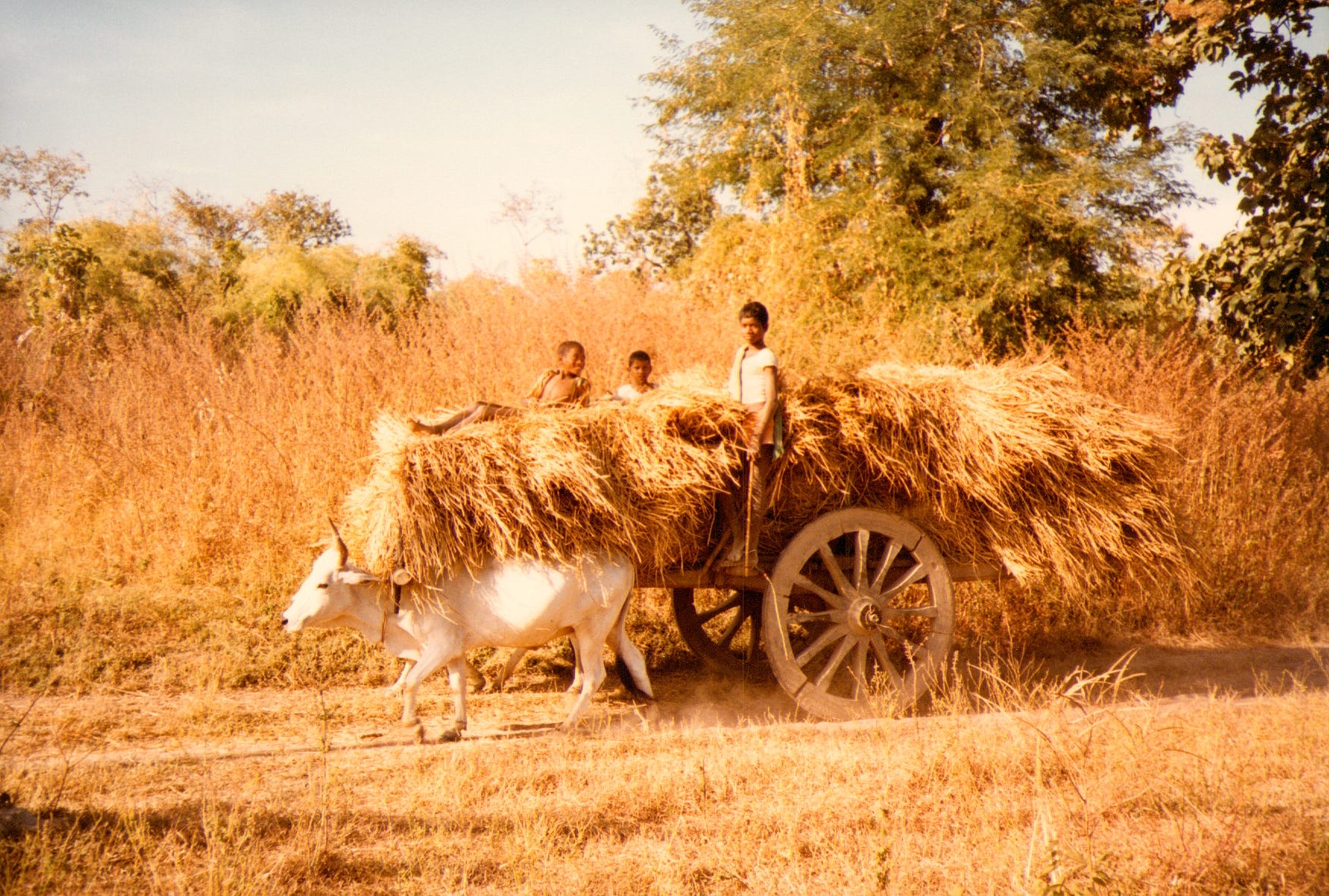
A forest, Telangana, May 1984.
The day starts like any other. At first light, the sky blue, the air fresh – before the haze wipes colour from the land, before the heat bores its knee into my chest. I am struggling. But then, so is everyone else. No-one’s designed for 45 degrees.
The rains are coming, the rains are coming….
How many times had I heard that? But they hadn’t come the last two years.
I work from dawn to mid-afternoon. Then I crash, sweating, on my rope-bed and stare at the mud walls and the thatch above. This is when the existential carousel spins, when I doubt everything – when I ask questions I cannot answer.
I need my music. I open the drawer in the desk, pull out my Walkman and clamp on the headphones. The mixtapes that had made it through the Bombay customs were my epi-pen. Noise from England – Gang of Four, Birthday Party, The Fall, Killing Joke – took me out of myself. For a while.
I scratch my biro against the back cover to get the ink flowing and then chew it for a while, before remembering something that Ellama had told me, the day before.
‘When four out of five kids are seriously underweight, undernutrition becomes invisible…we only notice the exceptions, and right now, a month before the monsoon…’
My Walkman clicks and then stops. I reach to flip the cassette and put my hand on another hand. I swivel around to see a group of men, in dusty, olive-green T-shirts and shorts, standing in the centre of the room, and a taller, older guy – the owner of the hand – looking down at me, his head cocked to one side. They’re carrying rifles. The guy standing by the door has his pointing at my chest.
Naxalites
I had thought they were ghosts. Villagers would say the word, then change the subject if I asked for more. Maoist revolutionaries who were fighting for tribal land rights, launching sporadic attacks on venal landlords and the police who protected them. Always on the move, hiding away in deep forest. Depending on what you read or who you spoke to, Naxalites were modern day Robin Hoods or terrorists who needed to be eliminated.
The tallest guy tugs the headphone wire: ‘What’s this?’ he asks, in clear English.
I yank the headphones off my head: ‘Music…’ I flip out the tape and stick in a local Telugu song. The leader takes the headphones and watches my hand shake as I press ‘play.’
Turning quickly to his group, he shouts a Telugu word I hadn’t heard before. He pulls the headphones off and hands them to the guy next to him, before turning back to me, no longer smiling:
‘Who is this?’
‘Health workers…they wrote a training song.’
‘Training? In what? Get us beedis…and chai.’
‘Let’s go on the terrace.’ I have to get them out of my hut.
‘Idi bagundi,’ the leader says to the guy by the door who drops his gun and steps to one side.
The other men – five of them – are rooted to the mud floor, passing the tape around. I edge past them and point across the compound to the kitchen. The leader follows me and, one by one, so do the others. In the light, I can see them better…and their weapons. Three of them are kids, probably late teens. Their faces have a toughness, but their eyes betray their youth. The rifles are ancient, heavy, with long, carved mahogany handles.
‘Who are you? Why are you here?’ says the leader.
I scrunch some paper to get the fire going, burning my fingers. I ladle out water from the clay cooler, fill the battered kettle, prop it up. One by one, the group sit down, cross-legged and lay their guns in front of them – all except one who stays on his feet, looking away from us, towards the treeline, his gun still slung over his shoulder.
‘Who are you? Why are you here?’
‘Good question…’ I gulped. ‘I am here to help kids…stop them becoming malnourished.’
‘What’s your native place?’
‘England.’
‘Don’t you have your own problems?
‘Yeah, er…’
‘So what are you doing here?’
‘Tracking kids’ growth…weighing them. If a child stops growing or they’re sick, we talk to the mother, try to figure what’s behind it. Then we…’
‘I’ll tell you what’s behind it,’ he snaps. ‘Stop weighing our kids. These families…’ he waved his arm around, his eyes locked on mine, ‘these families are victims of a crime – first their land is stolen, then they’re forced to work on it by the thieves…all supported by the Indian government.’
‘Here’s the chai,’ I try to steady my hand as I pour the brown brew into six aluminium cups.
‘Are the villagers learning anything from you?’
‘I don’t know…’
‘You’re out of your depth. Are you Christian?’
‘It’s not a religious project – it’s about development.’
‘Who are you to come from England to talk to us about development? Justice is what we need. And we fight for that ourselves. Where’s the sugar?’
I hand over the sugar jar and all the beedis I can find.
He shoots back the chai and waves his hand in a circle to the others.
‘We’re going now…but we’ll be back.’
They turn and stroll silently out of the compound and into the trees.
*
[This is a longer version of the story at the end of the ‘Decolonise’ chapter in Food Fight — first scribbled in a dusty notebook, re-told in this podcast interview with Gilly Smith.]

Thanks so much, Chloe...hope you enjoy it!
Got here via Gilly’s pod, looking forward to reading and learning more from you Stuart. Off to order the book now.