
The writing's on the wall
...and in the courthouse


Last week saw the release of an extraordinary report following an in-depth collaboration between academics and an international media coalition.
Big Food vs. the People shed a searing light on how transnational corporations deploy lawsuits and legal threats to derail, dilute and delay public health efforts in six countries: Mexico, Brazil, Colombia, India, Britain, and the United States.
235 lawsuits lodged over health policies targeting unhealthy food and beverages in a 15-year period (2010-25).
Three-quarters of them were filed by UPF manufacturers or trade associations representing them.
Of the cases with an identifiable plaintiff, 38% were brought by eight parent corporations: Coca-Cola, PepsiCo, Mondelēz, Kellogg’s, Danone, Ferrero, Xignux and Heartland Food Products Group.
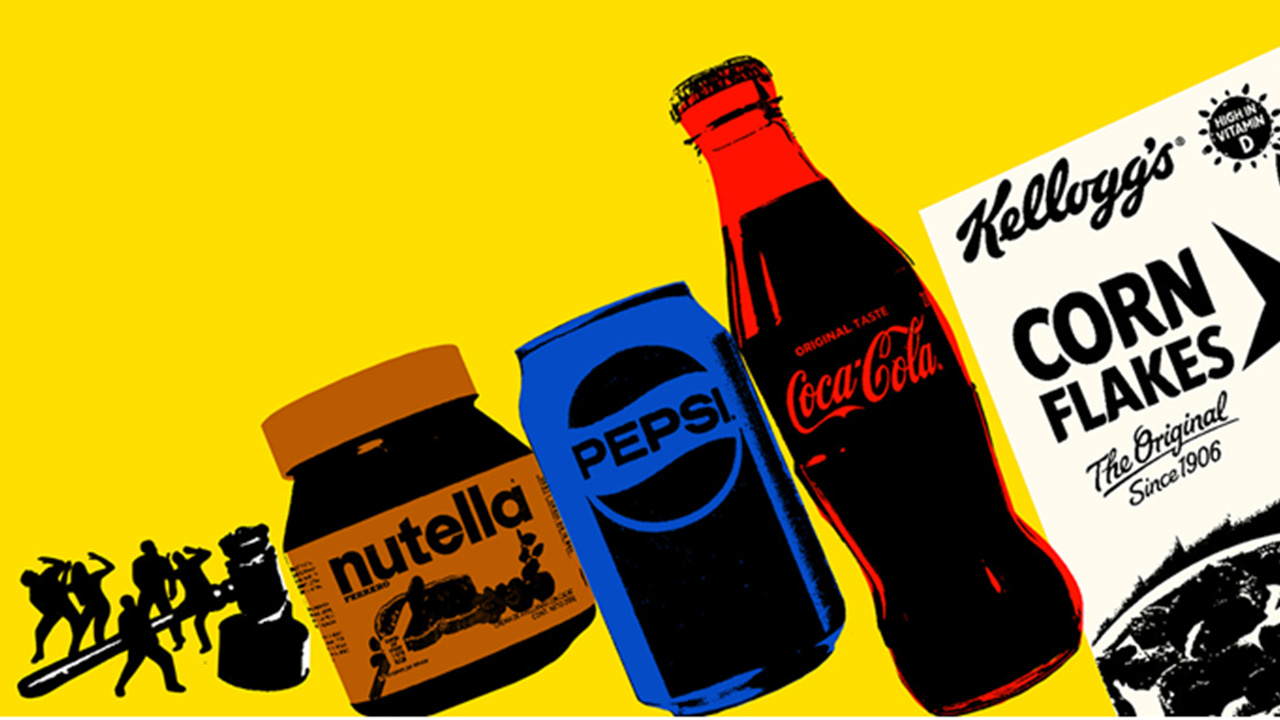
Dozens of cases are ongoing. Of those that have been resolved, three-quarters were lost by the food giants. But the length of some of the legal battles added up to almost 600 years in court.
More on this can be found in the Guardian: If all else fails, sue, in Thin Lei Win (a lead author)’s substack and this ATNi webinar.
It’s really a fantastic piece of work.
As discussed many times, the crux of the challenge on our hands is the simple fact that the Big Food behemoths make most of their huge profits from products that are least healthy for us and the planet we’re clinging on to.
Most of the corporate litigation is now happening in Latin America – the continent that was hit hardest and fastest by the ultra-processed tsunami. In turn, this led to some extraordinary fightbacks, led by brave activist-scholars. Their success in getting governments in Mexico, Brazil, Colombia and Chile to regulate for health (via sugar taxes, front-of-pack labelling, restrictions on advertising to young children etc) has pushed the industry into a corner.
This wave of lawsuits is, in this sense, a sign of progress as it represents the beginning of the end for unfettered profiteering at the expense of people’s health. The more sunlight that gets into the dark recesses of the playbook and its tricks and tactics, the less likely they are to succeed.
Five years ago, I started to investigate the corporate playbook in the food world and the way it’s been adopted and adapted from Big Tobacco’s over six decades ago.
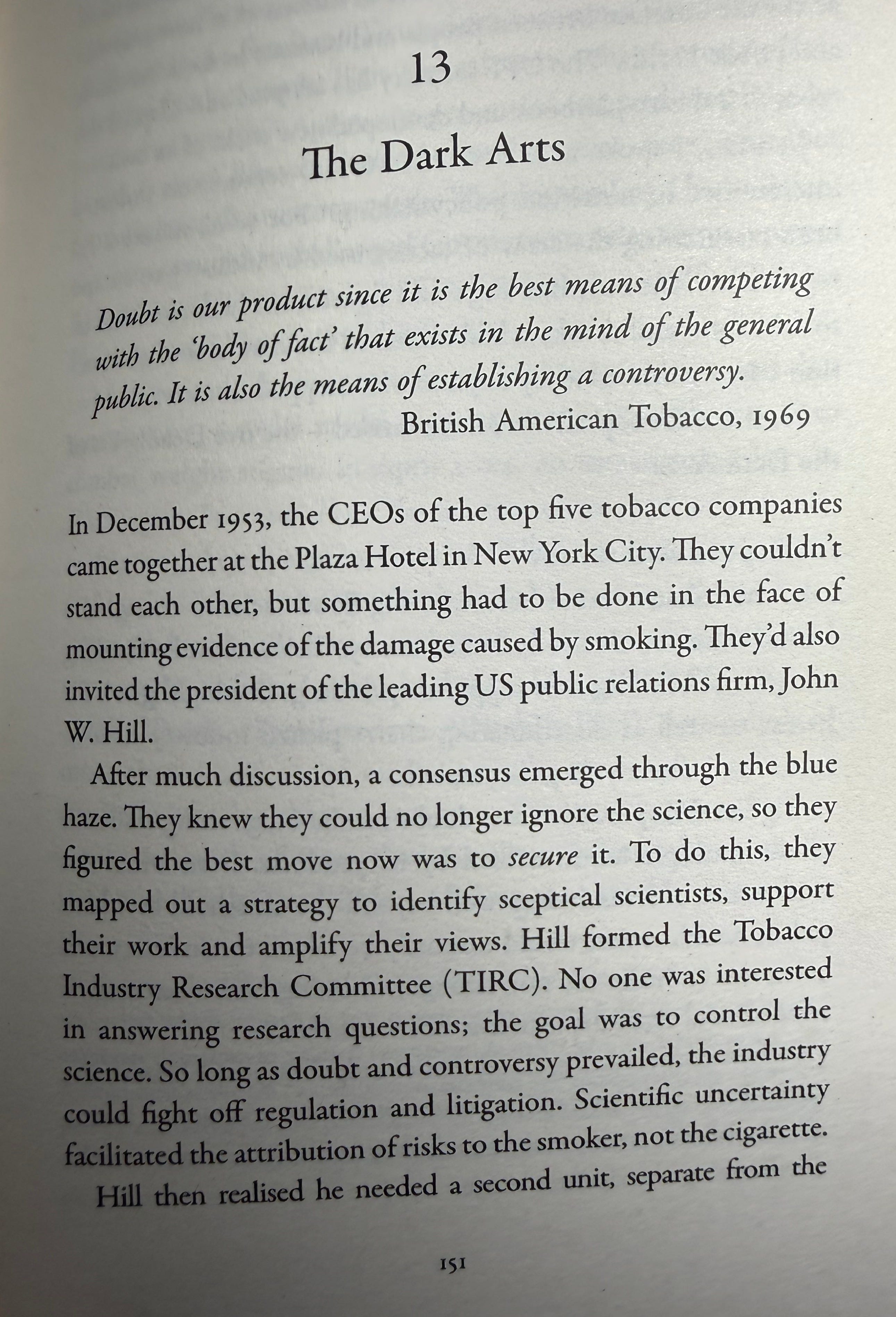
As well as derail, dilute and delay, there are other ‘Deadly Ds’ including
dispute (industry-funded scientists and associations sowing doubt on growing evidence of harms)
distort (including lobbying of government and media influence)
disguise (using trojan horse front groups)
distract (via small-scale sideline projects aimed at distracting our attention from the large-scale harms generated by the core business)
dodge (minimizing tax by shifting liabilities to tax havens).
For the people
Now, let’s look at other litigation on the other side – in this case for public health.
Julia Belluz wrote a punchy op-ed in the New York Times this week, starting with the story of the teen who took on a $10 trillion industry.
Again, I think this shows the tide is turning…consumers (who are, first and foremost, citizens) are now getting fed up. So are some federal governments in the US.
As Belluz reminds us, in the 1990s, state attorneys general started to sue the tobacco companies for a public health crisis that taxpayers were paying for. Three decades later, it’s happening with food and drink products that are not designed to nourish us.
The NYT piece led to an angry response from Marcia Terra: The choice is the consumer’s, not the industry’s
This turned out to be a fascinating read…perhaps not for the reasons intended. It’s a great case study of industry tricks and tropes.
Terra is paid by the food industry which she helpfully discloses. She starts by suggesting Belluz (co-author with Kevin Hall of widely acclaimed Food Intelligence) does not know about nutrition – or at least she’s not an expert, like Terra.
Here’s the first trope – leave policy discussions to expert scientists.
I’ve worked in nutrition for over four decades – my most valuable lessons about food and nutrition policy and practice have come from outside the nutrition echo chamber.
But let’s look at Terra’s critique. I will select key phrases and respond.
‘Industrialized food is safe too, for the same reason: it’s food’
This is a straw man. The key concern is not food safety, it’s the healthiness of a dietary pattern in which ultra-processed foods dominate.
‘Industrialized food gets eaten by billions…and none of that adds up to poisoning or withdrawal.’
Poisoning and withdrawal are not the outcomes being discussed (see above)
‘The comparison [between tobacco and food] might read well on the page, but the regulatory weight it drags along isn’t backed by the science.’
The comparison is not about regulatory weight – it’s about the histories of growing scientific evidence of harm attached to heavily-marketed products, and how governments respond. The tobacco comparison is the most well-documented use of legal action to hold an industry accountable for public health damage. Not to suggest cigarettes are equivalent to UPFs.
‘Food that hurts you is spoiled, contaminated, or unfit for consumption, full stop. No single food makes anyone sick on its own, and no single food cures anyone either.’
Again, this is not about food safety and it’s not about single foods (see above)
‘What we’re living through, more than anything, is an epidemic of physical inactivity the likes of which nobody has seen before.’
Not sure what ‘more than anything’ means here but we know physical inactivity is not the main driver of the rise of obesity.
‘The point is that it makes no difference whether the food came off an assembly line or out of a home kitchen, you can eat yourself into a calorie surplus either way.’
Yes, but it’s much easier to over-consume calories in a UPF-heavy diet compared to minimally processed, as has been shown. And it’s much harder to find healthier, affordable options when you live in a UPF-saturated neighbourhood.
‘None of that lets American school cafeterias off the hook, but that’s a fight to have with the government, not with industry.’
I agree we need to push government to ensure school meals are healthy – and we also need to clean up industry lobbying that seeks to derail, dilute or delay government regulation.
‘NOVA can end up ranking a nutritionally better product as more dangerous than a worse one, purely because it went through more industrial steps.’
This is an example of single food fetishism again – comparing product X against product Y when what we should be concerned about is the aggregate dietary pattern and the balance of unhealthy versus healthy items in diets.
Terra then gets a bit snarled up on food addiction. She cites Hebebrand in Neuropsychopharmacology to claim ‘the evidence for food addiction simply isn’t robust enough to support the concept’ I couldn’t find any such paper by this author in this journal. I did find this one by two different authors, both of whom are industry-funded.
She then mentions a 2026 review in Frontiers in Behavioral Neuroscience on food addiction claiming it ‘doesn’t prove the underlying construct is real.’
Here’s the actual conclusion: ‘Collectively, the present findings support the view that FA (food addiction) reflects a cluster of preexisting psychological constructs—such as craving, guilt, and disordered eating attitudes—rather than a clearly delineated disorder.’
A past co-author of Hebebrand’s, Ashley Gearhardt (quoted by Belluz) has written extensively and more recently on this, stating:
‘Foods higher in carbohydrates, glycemic load, energy density, and fat were rated as more addictive. These nutrient profiles were rare in minimally processed foods but common in UPFs, which frequently exceeded multiple addictive nutrient thresholds simultaneously.’
In her article, Belluz suggests lawsuits could lead to a range of other measures to protect public health including taxes, warning labels, reformulation as well as subsidies and improved access to healthy choices.
Terra responds:
‘Taxing food doesn’t work, not anywhere, not so far.’
I’m not sure if this is a scientific statement? There’s no specificity (which foods, where, when, over what period?) and no linked citation. Most of the taxes I’m aware of (long enough to plausibly show effects) are on sugar-sweetened beverages and they have been shown to work.
But again, tax is but one of several policy levers that will need to be applied to improve food environments.
Terra then goes after warning labels, citing a recent study in The Lancet which:
‘had the nerve to credit Chile’s policy package with cutting childhood overweight risk by roughly one percentage point and call that a win… scientific junk, plain and simple.’
In fact, this study (of more than 300,000 Chilean schoolchildren aged 4–6 years, used a cohort difference-in-differences approach) demonstrated “statistically significant, meaningful reductions in the prevalence of excess weight and decreases in BAZ among young children exposed to the first 18 months of the policy. The findings are robust across both binary and continuous outcome measures and are observed in both girls and boys, suggesting a broad and generalisable policy impact”
Prof. Barry Popkin, a co-author, is one of the leading nutrition experts on the planet, with more than five decades of experience. LinkedIn comment vs. Lancet paper…you decide what’s scientific junk.
Next up, a scoping review in the British Food Journal is cited to suggest ‘you’d need a much longer follow-up before drawing any conclusions.’
Yes, it did. The study was funded by the Latin American Alliance of Food and Beverage Industry Associations (though strangely the authors declared no conflict of interest.) I’m not sure what the point of it was really…why conduct a scoping study to state the obvious?
Next up, a Georgetown University study that ‘found no solid evidence that these labels have moved obesity rates anywhere.’
This study funded by the Healthy Weight Commitment Foundation (a coalition of major food and beverage manufacturers) was undertaken by Hank Cardello who for over three decades, worked in the UPF industry (Cadbury-Schweppes, Coca-Cola USA, Anheuser-Busch, General Mills). The only reviewer of the paper, Adam Drewnowski, former board chair of Coca-Cola funded ILSI, has happily taken food industry funding for many years.
But beyond the misinterpretations, the wobbly citations and rampant conflicts of interest, anyone working in nutrition-relevant policy and practice knows that no one intervention is going to significantly shift the obesity profile on its own…and certainly not in a couple of years. (GLP1s are different as they’re not preventive and they’re not widely accessible or affordable)
At the end of the opinion piece, Terra points to a few cases of botulism linked to homemade and artisanal preserves.
‘And people keep believing “natural” and “homemade” are automatically safer than anything industrialized. Articles like yours [Belluz’s] are a big part of why.’
I had to stifle a laugh at this point. After all this, a handful of botulism cases are being used as a reason not to touch the UPF industry?
But suddenly…
‘Why isn’t the pressure on governments to subsidize the nutritious, lower-calorie foods directly?’
Yes…I agree! This is a key part of the solution.
‘And be honest: is someone who spends two hours commuting home really going to cook from scratch every night? What world is that?’
Again, I agree. Convenience is not going to go away – but the parameters within which the industry operates need to be re-set to ensure nutrition isn’t sacrificed for convenience. I also think we need to look into localisation and food culture more – and how we can strengthen the commensality of eating meals with family and friends.
Terra closes by suggesting consumers are to blame for making bad choices, not industry.
In the second quarter of the 21st century, I am bemused that this argument is still being made, but here it is (if you need to dig in, recent post here and book here)
I live in the UK, the sixth richest country in the world. One in 8 households do not have access to adequate, affordable food that is nutritious and healthy.
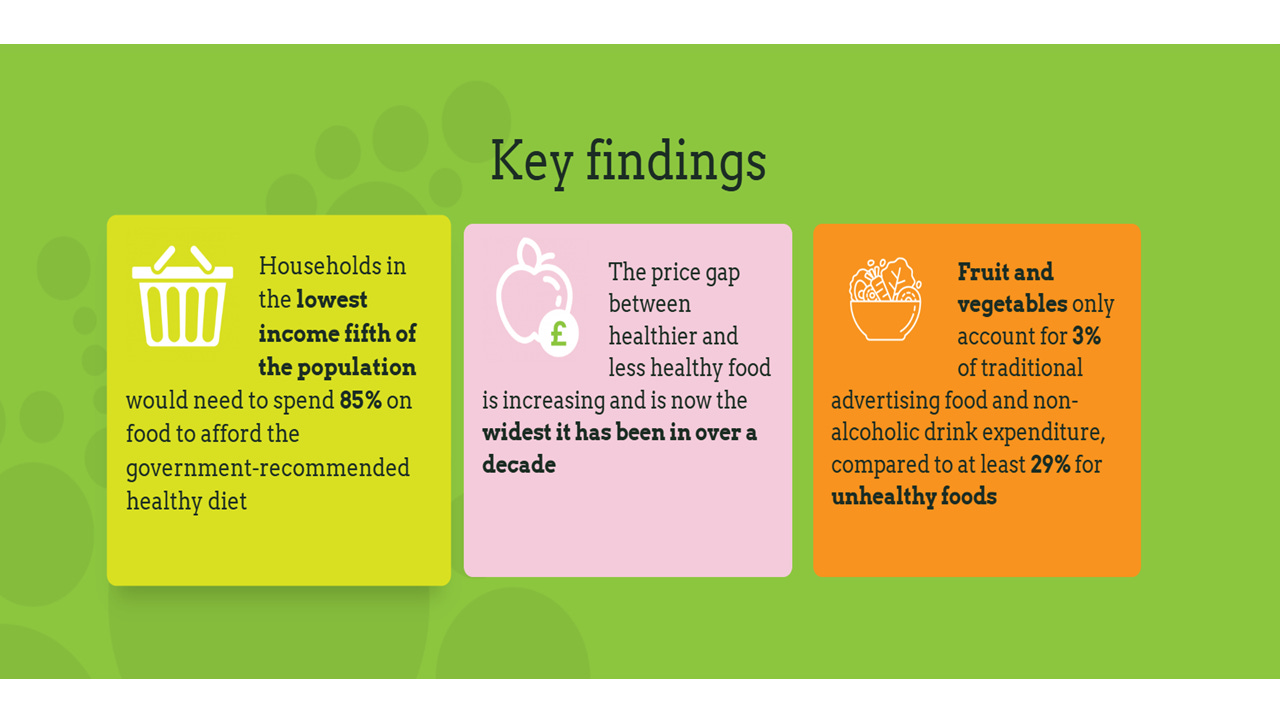
Blaming people for their food choices when they live in neighbourhoods inundated with outlets selling unhealthy foods and when their kids are bombarded with predatory marketing is not only wrong…it’s an insult.
Bits and bobs
Check this lively studio discussion in Australia on the struggle for healthy diets
And this amazing documentary ‘Duped’ on food fraud.
And finally, to close on a positive, if you live in the UK, check out Recipe for Change…and please do sign up!
All the best for the rest of summer…and remember to take plenty of hydration breaks, free of commercial interference!